


Cost-Saving Premium Quality
UNION delivers TOP 3 global quality at 20-30% lower cost vs EU/US brands.


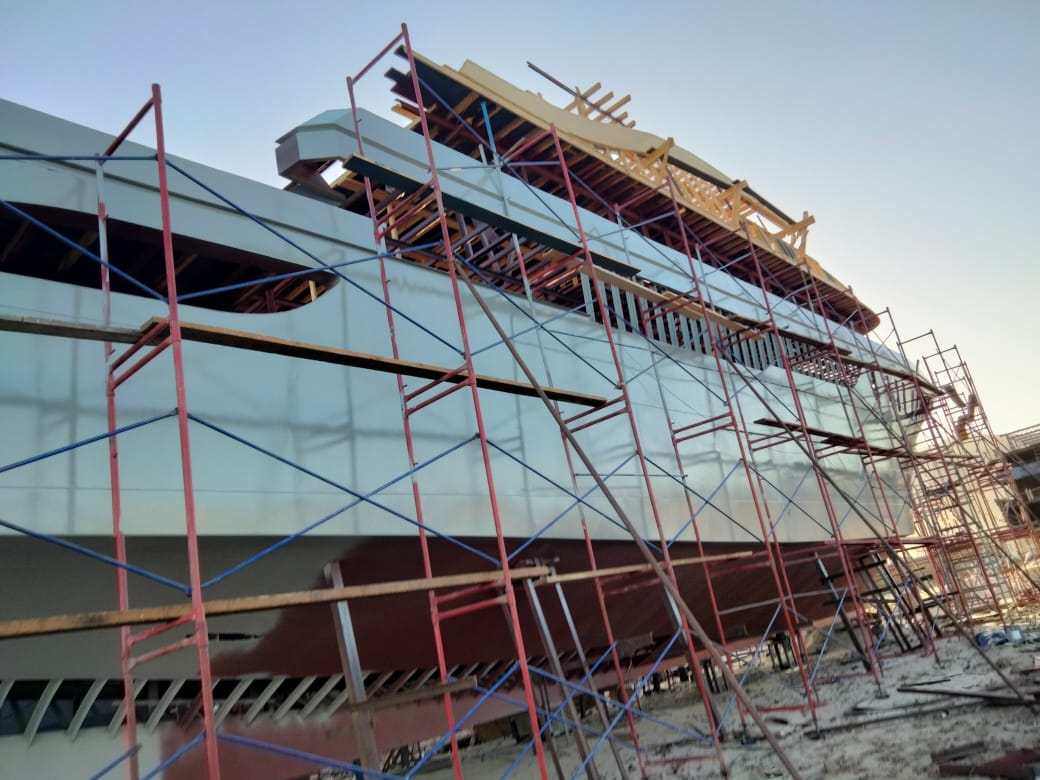
Superior Strength & Lightweight: Densities from 45–250 kg/m³ allow for optimal weight reduction without sacrificing the structural integrity required in boat building. This results in better fuel efficiency and performance.
True Marine-Grade Waterproofing: A closed-cell structure with less than 1.5% water absorption (ASTM D2842) ensures our foam board for boats will not rot, absorb water, or delaminate, guaranteeing durability in harsh marine environments.
High-Precision CNC Machining: We offer custom CNC cutting with ±0.2mm tolerances. Whether you need complex hull shapes, deck panels, or structural stringers, we can supply pre-cut boat building foam sheets that fit your design perfectly.
Excellent Fatigue & Impact Resistance: StruCell® foam absorbs vibration and withstands impact, crucial for withstanding the dynamic loads and occasional impacts experienced by hulls and decks.
Low Resin Consumption: The microcellular structure of our PVC foam core reduces resin uptake during vacuum infusion or hand lay-up, saving on material costs and reducing part weight.
We provide foam for boat building as raw panels or precision-machined components tailored to your production process.
Custom CNC Parts: Submit your CAD designs for hull sections, deck cores, bulkheads, transoms, and other structural elements. We machine them with breakaway tabs for secure shipping and easy final processing.
Versatile Material Options: Choose from various densities—P60 for lightweight decks, P80/P100 for high-load hulls, and P130/P200 for demanding structural applications.
Enhanced Bonding Surfaces: Optional grooved, perforated, or scrim-backed surfaces are available to improve mechanical bonding and resin adhesion with composite skins.
Large Panel Sizes: Standard and custom panel sizes to accommodate large projects, with thicknesses up to 500mm.
Density Grades: P45 (standard insulation) to P130 (high-strength for demanding applications).
Surface Treatments: Grooved or perforated surfaces for enhanced resin adhesion in composite panels.
Dimensions: Thicknesses from 3mm to 100mm+; panel sizes tailored to your production line needs.
Boat Hulls: The primary core material in sandwich composite construction for sailboats, powerboats, and yachts.
Deck & Superstructure: Creates stiff, lightweight, and non-thermal-conductive decks and cabin tops.
Transoms: Provides a strong, lightweight base for mounting outboard motors.
Bulkheads & Interior Structures: Used for lightweight, rigid partitions and furniture cores.
Stringers & Grid Systems: CNC-machined structural reinforcements integrated into the hull.
No Minimum Order Quantity (MOQ): We accept prototype and small-batch orders.
Free Samples: Request a free A4 sample to validate the material.
Fast Lead Times: 5-7 days for samples; 15-20 days for full container loads (FCL).
Global Shipping: We ship worldwide with customized packaging to ensure safe delivery.


ISO 9001

ISO 14001

RS Certification

TAK00001DV

RoHS

Flame Retardant Report
|


