

Author: Site Editor Publish Time: 2026-09-30 Origin: Site


The core experiences the pressure transmitted through the bagging stack, not simply the number displayed on a vessel controller. Record vessel pressure, vacuum pressure, units and whether readings are gauge or absolute. Tooling contact, unsupported regions and bag bridging affect the local condition. The responsible process engineer must establish the loading used in qualification and verify it during production.
Compressive strength describes a particular test response; creep concerns deformation over time under load. Temperature and dwell can change the response substantially. StruCell P200 has documented compressive strength of 4.8 MPa, but this value is not an autoclave-pressure limit. Request the appropriate time-and-temperature data, then measure retained core thickness and bond integrity after a representative cycle.
A resin can reach its required cure state while the core has already changed thickness or suffered damage. Conversely, a core can retain its dimensions while the resin remains under-cured. Evaluate both conditions separately. Include thermocouples on representative regions, the resin acceptance method and post-cure core inspection in the trial plan, particularly near thick sections and inserts.
A small coupon does not reproduce every thermal lag, bag bridge or pressure concentration on a full component. Use trial coupons to screen the material combination, then review the actual part geometry and equipment capability. Maintain the approved lay-up, bagging stack, instrument positions and cycle record so that a successful trial becomes a reproducible manufacturing specification.
An autoclave is a pressurised, heated vessel used to cure composite parts. A lay-up is sealed inside a vacuum bag, placed in the autoclave, and subjected to a carefully controlled cycle of temperature and pressure. In practice, the autoclave is an industrial pressure vessel engineered for precision — it heats the part while simultaneously applying several atmospheres of gas pressure on top of the vacuum bag.
An autoclave adds controlled external pressure to the heat supplied by an oven. With a suitable resin and bagging system, this can improve consolidation. It is not a universal guarantee of lower porosity or higher strength: qualified out-of-autoclave processes also produce demanding composite parts, and acceptance depends on the measured results.
The vessel, loading arrangement and monitoring system must suit the part and approved operating procedure. Automated records are useful, but similar traceability can be provided by instrumented ovens and other manufacturing systems. Assess the actual equipment capability instead of treating the word autoclave as a quality certification.
The cure recipe specifies vacuum, external pressure, heating rate, dwell and cooling requirements for the exact material system. No universal pressure range is recommended here. The resin specification, equipment instructions and core supplier’s written processing limits must all be satisfied before a trial cycle is approved.
The temperature is raised to lower the resin viscosity so it can flow into the reinforcement, then held at the cure temperature until the resin cross-links and hardens. Finally, the part is cooled at a controlled rate before pressure is released and the vacuum is broken.
Every step — ramp rate, hold temperature, hold time, pressure level, and cool-down rate — is tightly controlled and recorded. This precise control is what makes autoclave curing so repeatable, batch after batch, and it is the foundation of the quality that aerospace and high-end manufacturers depend on.
External pressure acts on the bagged stack and can promote consolidation while the resin is sufficiently mobile. Entrapped air and volatile management still depend on evacuation paths, resin chemistry and the timing of pressure application. A bag leak or a poorly designed lay-up cannot reliably be corrected simply by increasing vessel pressure.
Vacuum-bag compaction depends on the difference between ambient and bag pressure. An autoclave can increase that differential, but the resulting laminate properties must be measured. A room-temperature core compression value does not describe long-duration creep at cure temperature, and it cannot be converted directly into an allowable vessel setting.
Thick laminates and complex shapes require attention to heat transfer, resin exotherm and air evacuation. An autoclave may be a suitable route, but qualified oven, infusion or press processes may also meet the requirement. Compare the tested fibre content, porosity and properties of representative parts, not process labels alone.
The choice between vacuum bagging and autoclave curing comes down to performance versus cost. The table below summarises the key differences between the two approaches.
| Process | Pressure source | Evidence to compare |
|---|---|---|
| Vacuum bag in oven | Ambient-to-bag differential | Cure state, porosity and qualified laminate properties |
| Autoclave | Controlled vessel-to-bag differential | Same acceptance metrics, plus validated core creep and temperature limits |
PVC core suitability must be confirmed for the exact grade, temperature, pressure differential and dwell duration. The current StruCell knowledge base does not establish a universal 80–120°C autoclave limit. Request written processing data and test a representative core-and-skin construction before assigning a cycle.
For high-temperature autoclave cycles, a high-temperature PVC foam grade or a PET foam alternative may be required. Always confirm that the foam you select is rated for the exact cure temperature and pressure of your process.
The key property to check is compressive creep resistance, which describes how well the foam holds its thickness under sustained heat and pressure. A foam that creeps excessively will thin the core and weaken the finished panel, so this is a critical specification for autoclave applications.
Autoclave manufacture became important for demanding composite structures because it provides controlled heat and pressure. Historical adoption does not prove superiority over every modern route. Review the resin, tooling, evacuation and acceptance evidence for the component rather than making a universal claim that a vessel eliminates all voids.
Today, autoclave curing remains the standard for aerospace, high-end marine and motorsport parts, while vacuum and oven curing serve the broader industrial market. The technology has matured considerably, but the fundamental principle — heat plus pressure for consolidation — has not changed since the method was first developed.
Modern autoclaves are highly automated, with computer-controlled temperature and pressure profiles and full data logging. This automation has made the process more repeatable and more accessible than ever, allowing a wider range of manufacturers to produce laminates subject to the applicable qualification.
Heat and pressure work together on the resin system. Heat lowers viscosity so the resin can flow, while pressure drives that flow into the reinforcement and out through the breather fabric. As the resin cures, the pressure holds the laminate in place and prevents the formation of voids from volatiles.
This is why autoclave parts show such low void content. The combination of temperature and pressure is simply far more effective at removing trapped air than vacuum alone, and it is the reason autoclave-cured laminates are the benchmark for quality.
Understanding this interaction is the key to process development. Too little pressure leaves voids; too much pressure can squeeze out resin and starve the laminate. Finding the right balance is what distinguishes a well-tuned autoclave process from a poorly tuned one.
Autoclave-cured composites appear wherever performance and weight matter most. The main application areas include:
Aerospace — wings, fuselage panels and control surfaces where weight and strength are critical.
Motorsport and racing — chassis components and aerodynamic parts that demand maximum stiffness.
High-end marine — hulls, decks and spars for performance yachts.
Sporting goods — carbon fibre parts for bicycles, paddles and rackets.
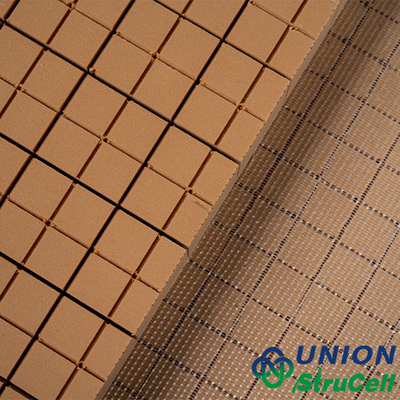
Product photograph: StruCell P200 structural PVC foam core. The pictured surface configuration is illustrative; confirm grade, dimensions and finish for the selected manufacturing process.
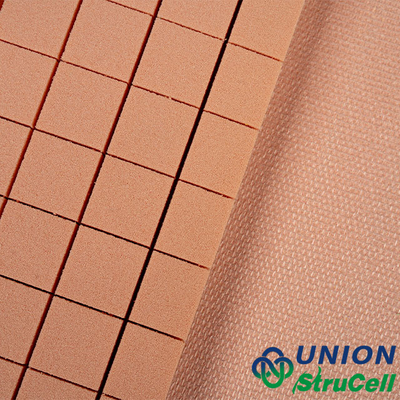
Product photograph: StruCell P100 structural PVC foam core. The pictured surface configuration is illustrative; confirm grade, dimensions and finish for the selected manufacturing process.
Autoclave curing provides a controllable heat-and-pressure environment, which can be valuable for demanding laminates. Actual porosity, fibre content and repeatability depend on materials, tooling and process control. Do not rank it above every other method without comparable qualification data for the intended construction.
The trade-off is cost and throughput. Autoclaves are expensive to buy and operate, they consume significant energy, and they limit part size to what fits inside the vessel. For many industrial applications, vacuum bagging or press curing offers a better balance of cost and performance.
Three variables define a cure cycle: temperature, pressure and time. Temperature must reach the resin's cure temperature without overheating the core; pressure must be high enough to consolidate but not so high as to crush the core; and time must be long enough for full cross-linking.
A qualified cycle should demonstrate acceptable cure state, dimensions, porosity and bond integrity. The acceptance plan needs defined limits rather than the unsupported promise of a low-porosity part. Trial coupons are useful, but thermal lag and bagging details on the full component can require additional validation.
Because these variables interact, developing a cure cycle is an iterative process. Engineers typically start with the resin manufacturer's recommended cycle and adjust the pressure and ramp rates based on trial parts and inspection results.
When selecting a core for autoclave curing, the two most important properties are temperature resistance and compressive creep resistance. The core must survive the cure temperature without softening, and it must resist the crushing pressure without collapsing.
The StruCell P200 product information identifies autoclave-related applications, but application positioning alone does not supply a temperature-and-pressure envelope. Ask UNION COMPOSITES for current processing documentation for the proposed grade. Record the supplier response with the resin instructions and the tested construction.
Autoclave, press, oven and infusion routes solve different manufacturing problems. Compare actual part dimensions, tooling, cure time, resin system, inspection results and installed cost. None of these routes has a universal position on a quality scale, and a method suitable for a flat coupon may not suit a large curved panel.
Choose the route that has demonstrated the required performance at the intended scale. Autoclave processing may justify its cost for a specific laminate, while an out-of-autoclave system may be more practical for another. Document the qualification evidence instead of assuming that the most expensive equipment produces the best component.
Large marine parts are often candidates for infusion, while smaller parts may use other routes. Aerospace manufacture also includes qualified out-of-autoclave technologies. Industry names are therefore not sufficient selection rules: the approved material specification and component qualification determine which route is acceptable.
NASA has compared autoclave and out-of-autoclave composite systems. This supports evaluating qualified alternatives rather than assuming that an equipment label alone establishes the performance of every laminate.
ASTM C273/C273M addresses shear properties of sandwich core materials. Compare results using the stated specimen, preparation and test conditions rather than inferring shear performance from density alone.
Autoclave processing demands rigorous quality control. Cure cycles must be recorded and traceable, and parts should be inspected for voids, porosity and dimensional accuracy. ISO 9001 processes ensure the consistency and traceability that high-performance applications require.
A reliable core foam manufacturer will provide the datasheets and technical support needed to run a successful autoclave process, including the temperature and pressure ratings of each grade.
One common misconception is that the autoclave is only for aerospace. In reality, the same principles benefit any application that demands a light, strong and low-porosity laminate, including performance marine, motorsport and premium sporting goods.
An autoclave is more than an oven because it adds controlled external pressure. That does not prove every autoclaved laminate is stronger than every oven-cured laminate. Resin formulation, fibre architecture, cure state, defects and testing conditions all influence the comparison.
A third misconception is that any foam core can be autoclaved. This is not the case — the core must be rated for the cure temperature and pressure, or it will collapse. Selecting the right grade is essential.
While every part has its own cycle, most autoclave cures follow the same sequence. The process is methodical and repeatable, which is what makes it so reliable.
Lay up the reinforcement and core, then seal the part inside a vacuum bag.
Apply vacuum to remove air from inside the bag and compact the stack.
Load the part into the autoclave and close and lock the door.
Pressurise with nitrogen and ramp the temperature on the programmed profile.
Hold at the cure temperature until the resin fully cross-links.
Cool at a controlled rate, release pressure, and remove the finished part.
Following this sequence carefully, with a validated cycle, produces consistent, high-quality parts time after time.
Autoclave curing carries a higher cost than vacuum-only methods, driven by the capital cost of the vessel, the energy to heat and pressurise it, and the longer cycle times. For low-volume, high-value parts, this cost is justified by the superior laminate quality.
For high-volume, cost-sensitive parts, manufacturers often turn to press curing or infusion, which offer a better cost-to-performance balance. The right choice depends on the value of the part and the performance it must deliver.
When evaluating the total cost, it is worth considering the value of a low void content. A stronger, more consistent laminate can reduce the need for overdesign, which can offset the higher processing cost over the life of the part.
The autoclave works with a wide range of resin systems. Epoxy prepregs are the most common choice for high-performance parts, because they offer precise resin control and excellent mechanical properties.
Wet-laminated epoxy, vinyl ester and polyester systems can also be autoclave cured, provided the resin and the core are compatible with the cure temperature. For these systems, the autoclave still delivers the benefit of pressure consolidation.
Resin compatibility must be confirmed for the exact formulation and grade, including chemical exposure, exotherm and the pressure-temperature history. A core temperature rating alone is insufficient. Wet-lay-up systems require their own validated bagging, resin-control and cure procedure; do not transfer a prepreg cycle to them by analogy.
Not all core materials behave the same under autoclave pressure. Closed-cell PVC foam, when properly graded, resists the compressive load without collapsing, which is why it is so widely used in autoclave-cured sandwich panels.
Balsa wood, by contrast, is stiffer but can absorb resin and moisture, and it requires careful handling under pressure. Honeycomb cores are very light but present bonding and edge-fill challenges that PVC foam avoids with its solid, bondable faces.
Compare candidate cores using elevated-temperature compression and creep information, bond compatibility and finished-panel tests. Density alone does not establish autoclave suitability, and PVC is not automatically the best option for every cycle. Keep both manufacturing and in-service requirements in the material selection record.
This is why foam core selection for autoclave curing starts with the pressure and temperature of the cycle, rather than the in-service loads alone. The processing environment is often the more demanding condition.
For marine builders, the choice between autoclave curing and vacuum infusion is a recurring decision. Vacuum infusion is the dominant method for large hulls and decks because it is economical, scalable and produces good-quality laminates.
Autoclave curing is used for smaller, high-performance marine parts — spars, foils, high-load fittings and racing components — where the extra consolidation and lower void content justify the higher cost.
Both methods work well with closed-cell PVC foam cores. The foam used in infusion is typically grooved or perforated to aid resin flow, while autoclave cores are selected for temperature and creep resistance.
In many programmes, the two methods are combined: infused hulls and decks with autoclave-cured spars and fittings. This hybrid approach delivers high performance where it matters while keeping overall cost under control.
Designing for autoclave curing starts with understanding how heat and pressure will act on the part. The part must fit the vessel, the tooling must withstand the cure temperature, and the lay-up must be arranged so that pressure consolidates it evenly.
Sharp corners and abrupt thickness changes are problematic, because pressure does not consolidate them evenly and resin can pool. Good autoclave parts use generous radii and smooth transitions to ensure consistent consolidation.
The core must be selected for the cure conditions, and the vacuum bag must be carefully sealed and pleated so that it can follow the part contour without bridging. Bridging prevents the pressure from reaching the laminate and leaves voids.
Finally, the cure cycle must be validated for the specific part and material combination. A cycle that works for one laminate may not work for another, so process validation is an essential part of autoclave part development.
Even with careful process control, autoclave curing can occasionally produce defects. Most issues fall into a few well-understood categories that can be diagnosed and corrected.
Voids and porosity — usually caused by insufficient pressure, a bag leak, or inadequate vacuum. Check the bag seal and increase consolidation pressure.
Core collapse — caused by a core not rated for the cure temperature or pressure. Verify the grade and, if necessary, switch to a higher-density or higher-temperature foam.
Resin starvation — caused by excessive pressure or too little resin. Reduce pressure or increase resin content.
Warpage — caused by uneven cooling or asymmetric lay-up. Use controlled cool-down and balanced laminates.
Most of these problems are avoided at the process development stage by validating the cycle, the bag and the core selection before production begins. A methodical approach saves far more time than it costs.
Autoclave processing continues to evolve. Modern vessels are more energy-efficient, more automated and more instrumented than ever, with real-time monitoring of temperature and pressure at multiple points across the part.
Out-of-autoclave (OoA) processing has grown in parallel, offering oven-curable prepregs and infusion systems that approach autoclave quality at lower cost. For many applications, these methods are now a viable alternative.
Autoclave and out-of-autoclave technologies both continue to develop. Future use depends on material qualification, component size, production economics and the applicable performance requirements. A forecast of market preference is not needed to justify the engineering decision for a current part.
To understand why autoclave curing produces such high-quality laminates, it helps to understand how voids form in the first place. Voids are created when air or volatiles become trapped in the laminate during lay-up or during resin cure, and they are the primary source of strength loss in composites.
Vacuum removes a portion of this trapped air, but it cannot compress the laminate enough to eliminate the smallest bubbles. Pressure does what vacuum cannot: it compresses the entire stack, collapsing bubbles and driving the remaining volatiles into solution in the resin.
Porosity must be measured using the method and specimen requirements in the qualification plan. This article does not assign a universal sub-one-percent result to autoclave parts or a fixed porosity to vacuum-only parts. Compare representative laminates made from the actual candidate material systems under controlled conditions.
Pressure can affect consolidation and void behaviour, but its benefit is tied to resin rheology, evacuation and cycle timing. Qualified vacuum-only systems can also achieve demanding requirements. The useful question is whether the proposed process meets the measured acceptance criteria, not whether one equipment category is universally indispensable.
Different industries use the autoclave in different ways, reflecting their performance requirements and cost tolerances. The table below summarises how each industry applies autoclave curing.
| Application | Potential constraint | Required evidence |
|---|---|---|
| Aerospace component | Approved material and process specification | Component qualification; not merely an equipment label |
| Marine component | Part size, moisture and local loads | Representative laminate and sealed detail tests |
| Sports component | Impact response and rules | Finished-product tests and applicable approval |
Successful autoclave projects depend as much on the core material as on the process. Working with an experienced foam core supplier helps ensure that the core you specify is rated for your exact cure temperature and pressure.
A good supplier will provide complete datasheets, including compressive creep resistance and temperature ratings, and will help you select the right density for your cycle. They can also advise on grooved or perforated options if you later switch to an infusion process.
For projects that combine autoclave and infusion, a supplier with a broad product range can supply a single consistent foam family across both processes, simplifying procurement and reducing variation.
Autoclave curing remains an important manufacturing option because it combines controllable heat and external pressure. Its suitability must be demonstrated for the component, resin and core. A qualified alternative is not inferior merely because it uses an oven, a press or an infusion arrangement.
Heat, pressure and vacuum must be coordinated to obtain acceptable cure and consolidation. The final evidence comes from dimensional inspection, material tests and the component qualification plan. The process name alone cannot substantiate claims that a part is lighter, stronger or more reliable than another design.
For applications where these qualities matter — aerospace, motorsport, high-end marine and premium sporting goods — the autoclave remains the benchmark. For cost-sensitive industrial parts, vacuum infusion and press curing offer excellent alternatives, and the two approaches are often combined in a single programme.
Understanding what the autoclave process is, and how heat and pressure work together, is the foundation for making the right curing decision for your composite project.
The idea of using pressure to improve material properties is not new. Metal forgings, laminated timber and early plastics were all pressed to consolidate them and remove defects, long before composites existed as a material class.
When modern composites emerged in the mid-twentieth century, manufacturers quickly discovered that oven curing alone left voids and inconsistency. The solution was to adapt pressure-vessel technology to composite curing, and the composite autoclave was born.
The aerospace industry drove the early development of the autoclave, because its demanding strength and weight requirements left no room for voids. As the technology matured, it spread to motorsport, marine and sporting goods, where the same benefits applied.
Pressure-assisted composite curing is a mature technology, but material and process qualification remain necessary. Modern manufacturing includes several viable routes. Select equipment around the tested construction and production requirement rather than assuming that historical use confers automatic superiority.
An autoclave is a pressurised vessel operating at high temperature, and it must be treated with respect. Proper training, maintenance and operating procedures are essential to safe operation.
Never exceed the rated pressure and temperature of the vessel.
Verify that the door is correctly locked and sealed before pressurising.
Use inert gas — typically nitrogen — for pressurisation to avoid combustion risk.
Inspect seals, valves and safety interlocks on a regular schedule.
Follow the validated cure cycle and never deviate without documented approval.
A well-run autoclave operation combines the precision of a validated process with the discipline of a strong safety culture, producing both high-quality parts and a safe working environment.
The quality of an autoclave-cured part depends heavily on the tooling and bagging materials used. The mould must be stable at the cure temperature, so that it does not distort the part as it heats and cools, and it must be matched in thermal expansion to the laminate.
Caul plates are rigid plates placed on top of the lay-up to spread the pressure evenly and give the part a smooth surface finish. They are particularly valuable for flat or gently curved parts where the bag alone would leave an uneven surface.
The vacuum bag itself must be carefully chosen and applied. It must be able to follow the part contour without bridging, because any area where the bag is held away from the part will not receive the full consolidation pressure.
Breather and bleeder fabrics complete the bagging stack. The breather provides a path for air to escape, while the bleeder absorbs excess resin. Getting the balance right ensures the part is neither resin-starved nor resin-rich.
For sandwich panels, the tooling must also support the foam core evenly, so that the core is not crushed or displaced during the cure. A well-designed tool set is as important as the cure cycle itself to the quality of the finished part.
If you are investing in autoclave capability, several factors will shape your decision. The internal diameter and length of the vessel determine the maximum part size, while the maximum pressure and temperature ratings set the range of materials you can cure.
Modern autoclaves offer extensive automation and data logging, which improve repeatability and traceability. For high-performance work, this level of control is worth the investment, because it directly supports the quality requirements of aerospace and similar industries.
Operating cost is also a significant consideration. Energy consumption, maintenance and cycle time all contribute to the cost of each part, so the autoclave must be sized and specified to match your expected production volume rather than simply the largest part you might make.
Finally, consider the support and training available from the equipment supplier, because a well-supported autoclave will run more reliably and safely over its service life.
View documented StruCell P45 grade information as an additional material reference; this is not an automatic application recommendation.
Send the core supplier the proposed grade, thickness, reinforcement, resin system and full cycle rather than asking only whether PVC can be autoclaved. Include heating and cooling rates, dwell, external pressure and vacuum conditions. Ask which properties were measured after processing and whether the supporting data apply to your supplied surface configuration. An application statement on a website is a starting point for discussion, not an approval document.
Mark repeatable measurement locations on a trial panel before cure. Record the original core dimensions and distinguish tooling compression from permanent material change. After cooling and releasing pressure, inspect thickness, surface print-through and the skin-to-core interface. Acceptance limits must be agreed before the trial; do not define success after seeing the result. If the process causes unacceptable change, revisit the material or cycle rather than merely increasing density.
Log material batches, out-time where applicable, bag leak checks, instrumentation and the complete heat-pressure-vacuum history. Compare part temperatures with the programmed vessel temperature, especially during heating and cooling. A satisfactory controller trace cannot rule out a cold region or a damaged bag. Retain the inspection and mechanical-test results with the cycle record so that future production changes have a clear baseline.
A foam trial establishes material behaviour, not pressure-vessel safety. Only trained personnel using approved equipment procedures should operate an autoclave. Interlocks, inspection and emergency arrangements remain the equipment operator’s responsibility. This guide deliberately supplies no operational pressure recipe; those settings must come from the authorised process and equipment documentation.
Autoclave — A pressurised, heated vessel used to cure composite parts under controlled temperature and pressure to eliminate voids and maximise laminate quality.
Vacuum bag — A sealed film bag from which air is evacuated during curing to compact the laminate and remove trapped air.
Void content — The percentage of a laminate occupied by air bubbles; a lower void content indicates a higher-quality, stronger laminate.
Fibre volume fraction — The proportion of a composite occupied by reinforcement fibres, expressed as a percentage; higher values generally mean higher stiffness.
Prepreg — Reinforcement fabric pre-impregnated with a measured amount of resin, commonly used in autoclave curing for precise resin control.
Cure cycle — The defined recipe of temperature, pressure and time used to cure a composite part.
Cross-linking — The chemical process by which resin molecules bond into a rigid network during curing.
Creep resistance — The ability of a material to resist slow deformation under sustained load, critical for cores used in autoclave processing.
Consolidation — The process of compressing a laminate stack to remove air and ensure full contact between the layers.
Breather fabric — A porous layer in the vacuum bag that allows air and excess resin to escape during curing.
There is no universal composite autoclave temperature. Follow the exact resin cure specification and the core supplier’s documented processing envelope. Validate temperature, dwell and pressure together on the intended laminate.
Some grades can be evaluated for autoclave manufacture, but suitability is not universal. P200 application information is not a complete cycle rating. Obtain written grade-specific limits and qualification results before production.
Pressure can support consolidation while vacuum and evacuation paths help manage trapped air. The result also depends on resin viscosity, volatiles and cycle timing. Measure porosity rather than assuming all voids have disappeared.
No. Qualified oven, infusion, press and other routes can meet demanding requirements. Select the route using the approved construction and measured component performance.
Use the pressure specified by the approved material-and-process procedure. Core compression data at one temperature cannot define the vessel pressure setting. Confirm differential pressure, dwell and equipment limitations with the responsible engineer.
Cycle duration is determined by resin cure requirements, part thermal response and cooling constraints. No generic dwell time is suitable for every laminate. Record actual part temperatures and verify the required cure state.
The pressurising medium is defined by the equipment and process specification. Do not substitute gases or operating settings from a general article. Follow the authorised vessel safety and operating documentation.
Yes, excessive temperature, pressure or dwell can cause deformation or damage. Test retained thickness and interface quality on a representative construction. Do not assume density alone prevents collapse.
Autoclave curing uses a controlled pressurised vessel; out-of-autoclave routes do not require that vessel. Both need a qualified material system and acceptance plan. NASA has investigated demanding out-of-autoclave composite applications.
Only where the resin, core and complete procedure are suitable and validated. A prepreg cure cycle cannot automatically be transferred to wet lay-up. Confirm resin control, exotherm and the required inspection evidence.


