Author: Site Editor Publish Time: 2026-09-29 Origin: Site


Closed-cell describes the arrangement of individual gas-filled cells within a polymer foam. It is a structural description, not a complete performance specification. Cutting a board exposes cells at its surface, and grooves, perforations, joints and machining change the pathways available to resin or water. Distinguish the bulk cell structure from the condition of the finished panel edge when evaluating moisture resistance.
Density is mass per unit volume, while the grade identifies a particular material specification. The documented StruCell® P45 density is 48 kg/m³; the grade name is not an exact measured density. Compare the actual density range, strength values and test methods in the selected technical data sheet. A nominal label alone does not establish a design allowable, the processing window or approval for a particular customer project.
The core transfers shear between the face sheets while maintaining their separation. Shear strength, shear modulus and the quality of the skin-to-core interface therefore matter alongside compressive strength. A board that survives a local compression check can still be unsuitable for a panel dominated by shear or bond failure. The complete laminate, support arrangement and load case must be evaluated together.
Process qualification means demonstrating that the specified core, resin, reinforcement and cure route produce a repeatable panel meeting the acceptance criteria. It includes preparation, storage, lay-up, consolidation and inspection. Passing a material test does not automatically qualify every resin formulation, elevated-temperature cycle or part geometry. Keep the tested construction and manufacturing record with the approved specification so that production changes can be reviewed.
PVC foam is a rigid, lightweight polymer foam produced by expanding a PVC-based compound with a chemical or physical blowing agent. During expansion, millions of tiny gas-filled cells form inside the polymer. What makes the material "closed-cell" is that each cell is an independent, fully sealed bubble, completely surrounded by solid polymer walls. This is not a minor manufacturing detail — it is the defining feature that gives the foam its structural and environmental performance.
Because the gas inside each cell cannot migrate to neighbouring cells, the foam behaves like a strong, closed structure rather than a sponge. Closed-cell PVC foam is rigid, dimensionally stable and highly resistant to water and moisture ingress, which is exactly what a structural core material must be. This is why it has become the reference core for demanding sandwich construction.
The alternative is an open-cell foam, in which the cell walls are broken and the voids interconnect. Open-cell foams are soft, breathable and absorbent, and they are used for cushioning, filtration and sound absorption — not for load-bearing sandwich cores. Understanding this distinction is the first and most important step in selecting the right core for a composite structure.
In practice, closed-cell PVC foam sits in the middle of the core-material landscape: lighter and more consistent than wood, stronger and more water-resistant than most open-cell foams, and more economical than many advanced syntactic cores. It is this balance that has made it a widely used structural core option.
It is also worth noting that "PVC foam" is not a single product but a family of materials. Grades differ in density, cell size, temperature rating and mechanical properties, and these differences are significant enough that selecting the wrong grade can lead to a poor result even when the general material choice is correct. A knowledgeable supplier can guide this selection, which is why working with an experienced foam manufacturer is so valuable. Throughout the rest of this guide, we will unpack the specific properties and selection factors that distinguish one grade from another, so that you can specify the right core with confidence.
Closed-cell PVC foam is typically produced by extruding or press-moulding a PVC formulation that contains a blowing agent. Under heat, the blowing agent decomposes and releases gas, which expands the softened polymer into a cellular structure. The key to achieving a closed cell is controlling the expansion so that each bubble remains isolated within a continuous polymer matrix, rather than rupturing into neighbouring cells.
Modern PVC foam production is highly controlled, which is why the material delivers excellent batch-to-batch consistency. In composite manufacturing, this consistency is a genuine commercial advantage: a core with uniform density and cell size produces predictable resin uptake and consistent mechanical properties in the finished laminate, which in turn reduces scrap and rework on the production line.
The result is a closed-cell PVC foam board that can be supplied in sheets of controlled thickness and density. These sheets are easy to cut, machine, thermoform and bond, which makes the material adaptable to everything from flat panels to complex curved hulls and intricate three-dimensional shapes. For fabricators, this means fewer processing steps and lower overall manufacturing cost.
The difference between closed-cell and open-cell foam is not merely academic — it controls how the material performs in service. The table below summarises the key distinctions that engineers must understand when specifying a core.
| Property | Closed-Cell PVC Foam | Open-Cell Foam |
|---|---|---|
| Cell structure | Sealed, independent cells | Interconnected voids |
| Water absorption | Low; confirm grade and test conditions | High (sponge-like) |
| Compressive strength | High | Low |
| Rigidity / stability | Rigid, dimensionally stable | Soft, flexible |
| Typical use | Structural sandwich core | Cushioning, filtration |
| Grade | Density (kg/m³) | Compressive strength (MPa) | Shear strength (MPa) |
|---|---|---|---|
| P45 | 48 | 0.6 | 0.5 |
| P60 | 60 | 0.93 | 0.76 |
| P80 | 80 | 1.4 | 1.15 |
| P100 | 100 | 2.0 | 1.44 |
| P130 | 130 | 3.0 | 2.1 |
| P200 | 200 | 4.8 | 3.5 |
| P250 | 250 | 6.2 | 4.0 |
Source: documented StruCell® series specifications. P130 has a documented density range of 120–150 kg/m³. Confirm current data, test methods and acceptance values for the supplied lot; the table is not a structural design allowable.
Closed-cell PVC foam is valued above all for its high stiffness-to-weight ratio. It offers high compressive strength and shear strength relative to its low density, which allows engineers to build light yet stiff sandwich panels. Because the cells are sealed, the foam also resists resin uptake during lamination, keeping the finished laminate light and predictable — a property that is difficult to achieve with open-cell or wood cores.
The material is available across a wide density range, with documented StruCell® grades from 48 kg/m³ through P300 (290–330 kg/m³). Higher-density grades have thicker cell walls and therefore higher strength, while lower-density grades are lighter and more economical. This range lets designers balance stiffness, weight and cost for each specific application, rather than forcing a one-size-fits-all solution.
Another important property is fatigue resistance. Closed-cell PVC foam withstands cyclic and dynamic loading without the progressive crushing or degradation that affects many other core materials. This is why it is trusted in marine and wind applications, where structures are subject to repeated loads over decades of service.
The foam also exhibits excellent compressive creep resistance, meaning it retains its thickness and stiffness under sustained load. For a sandwich panel, this translates into a stable, predictable structure that does not slowly deform under the weight it is designed to carry.
Because the cells are sealed, water cannot easily penetrate closed-cell PVC foam. Water absorption must be stated with the selected grade, test method, exposure duration and pressure; a short immersion result is not a lifetime guarantee. This is a decisive advantage in marine structures, where a wet core means added weight and a progressive loss of strength over time — and ultimately, costly repairs.
For boat hulls, decks and transoms, low water absorption means the structure stays light and strong throughout its service life, provided the skins and edges remain adequately protected and damage is repaired. Combined with good skin bonding, this makes closed-cell PVC foam the default core for wet-environment applications.
The practical benefit is longevity. A properly designed, sealed and inspected sandwich structure can limit moisture-related weight gain and degradation; damage and exposed edges still require maintenance. This is why surveyors and naval architects consistently recommend closed-cell PVC foam for below-waterline structures.
For a deeper look at this topic, see our guide on water absorption in closed-cell foam, or explore the closed-cell PVC foam board product range.
Closed-cell PVC foam also offers useful thermal insulation, thanks to the trapped gas in its cells, and it resists a wide range of chemicals, including fuels, oils and many solvents. These properties make it suitable for applications where both structural performance and environmental resistance are required.
For applications with fire-performance requirements, fire-retardant PVC foam grades are available. These grades are formulated to meet relevant flammability standards and are widely used in transportation and construction, where fire safety is a primary concern. When specifying, confirm the exact standard your project must meet and request the corresponding certification.
Marine is the largest single application for closed-cell PVC foam. It is used in hulls, decks, bulkheads, transoms, stringers and superstructures because it combines low weight, high stiffness and outstanding water resistance. Boat builders rely on closed-cell PVC foam to produce hulls that are light, stiff and durable in a salt-water environment.
The material is compatible with the polyester, vinyl ester and epoxy resin systems used in boat building, and it can be vacuum-bagged or hand-laminated with standard techniques. This means boatyards can adopt it without major changes to their existing processes.
Our boat building foam core and foam core for boat building pages provide detailed grade and thickness information for marine fabricators.
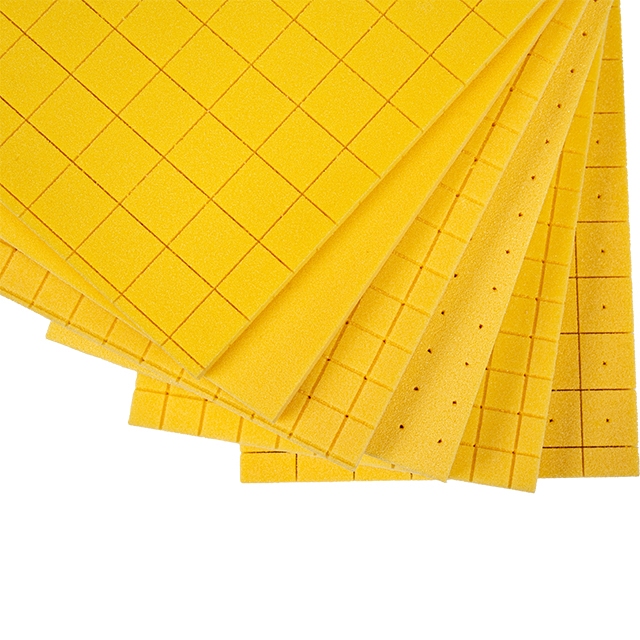
StruCell® P60 foam with scrim-backed surface treatment; confirm the required surface configuration for the intended lamination process.
In wind energy, closed-cell PVC foam is used in blade shells, shear webs and nacelle covers, where its fatigue resistance and low density help produce longer, lighter blades. Longer blades capture more energy, so the weight saved by using a foam core translates directly into improved turbine efficiency.
In transportation, closed-cell PVC foam is used in bus and rail panels, truck bodies and interior components, reducing weight while maintaining stiffness. Lower vehicle weight improves fuel efficiency and payload capacity, which is why transport manufacturers continue to adopt foam cores.
For architectural and industrial uses, closed-cell PVC foam boards are also specified for insulated panels, cold storage and lightweight structural elements, thanks to their combination of strength and insulation.
Closed-cell PVC foam has become a leading core for sports equipment, from surfboards and paddleboards to the increasingly popular pickleball paddle. Its light weight, consistent density and durability make it ideal for cores that must deliver a predictable, high-performance feel.
In water sports, the low water absorption of closed-cell PVC foam is a decisive advantage, since a board that absorbs water becomes heavy and sluggish. In pickleball and similar paddle sports, the foam core determines much of the paddle weight, feel and power, and closed-cell PVC foam delivers the consistency that players demand.
The same qualities that make closed-cell PVC foam good for boards and paddles also make it suitable for other leisure equipment, including kayaks, canoes, camping and outdoor gear. The material is easy to shape and finishes cleanly, and it is light enough to keep recreational equipment easy to carry and transport.
Closed-cell PVC foam is often compared with PET foam, balsa wood and honeycomb cores. Each has its place, but PVC foam can be considered where low water absorption, high shear strength and processing flexibility are required together.
Compared with balsa, closed-cell PVC foam offers far lower water absorption and much better batch-to-batch consistency, at the cost of a slightly higher price. Compared with PET foam, PVC foam typically offers higher shear strength and lower water absorption, while PET foam adds recyclability and higher temperature resistance. Compared with honeycomb, PVC foam is easier to bond at edges and offers a more uniform face feel.
| Core material | Water absorption | Stiffness-to-weight | Consistency | Relative cost |
|---|---|---|---|---|
| Closed-cell PVC foam | Very low | High | Excellent | Moderate |
| PET foam | Low | Good | Excellent | Moderate |
| Balsa wood | Moderate–high | Excellent | Variable | Low |
Selecting a closed-cell PVC foam grade starts with the load and environment. Determine the required compressive and shear strength, the acceptable weight, and the exposure to water or chemicals. Then choose the lowest density that meets the structural requirement, since lower density means lower weight and cost.
The manufacturing process also matters. Vacuum-bag and hand-layup processes accept a wide density range, while autoclave and press processes may require specific grades to avoid cell collapse under pressure. Always confirm that the grade you select is rated for your cure temperature.
Our composite sandwich core material page explains these considerations in more detail and lists the available grades.
Closed-cell PVC foam is easy to work with. It can be cut with standard tools, thermoformed into curved shapes, and bonded with polyester, vinyl ester or epoxy resins. Light surface preparation — such as abrasion, cleaning and, where required, a primer — improves resin wet-out and bond strength.
The foam is compatible with wet lay-up, vacuum bagging and autoclave curing, making it flexible across many fabrication processes. It should be stored flat, dry and away from direct sunlight before use, and cut edges should be sealed during lamination to prevent any moisture path.
ISO 845:2006 addresses measurement of apparent overall density and apparent core density in cellular plastics and rubbers. Compare density data using a stated method rather than treating a grade name as a measurement.
ASTM C273 concerns shear testing of sandwich core materials. Shear properties require a defined specimen and test configuration; they cannot be inferred solely from a closed-cell label.
The cost of closed-cell PVC foam is driven primarily by density: higher-density grades cost more because they contain more polymer. However, total installed cost also includes processing, so a grade that is easy to cut, bond and laminate can be cheaper overall than a nominally cheaper material that is harder to work with.
When sourcing, look for a manufacturer that controls density, cell structure and thickness to tight tolerances, and that provides complete datasheets, traceable batch records and application engineering support. A reliable core foam manufacturer will help you select the right grade and avoid costly mistakes.
A reputable PVC foam manufacturer controls density, cell structure and thickness to tight tolerances, ensuring consistent performance batch after batch. Quality management is typically supported by ISO 9001 processes, and the material is supplied with full documentation and technical support.
When sourcing closed-cell PVC foam, look for a supplier that provides complete datasheets, traceable batch records and application engineering support. This ensures the foam you specify is the foam that arrives on your production line — and that it will perform as designed.
Structural foam cores have a surprisingly long history. The modern era of rigid PVC foam began in the second half of the twentieth century, when manufacturers developed cross-linked and linear PVC foams specifically for marine and industrial sandwich construction. These early products replaced solid wood and balsa cores in applications where weight and water resistance mattered.
Since then, PVC foam technology has advanced considerably. Modern closed-cell grades offer a far wider density range, better thermal stability and more consistent mechanical properties than their predecessors. This evolution has allowed PVC foam to expand from its marine origins into wind energy, transportation, sports equipment and industrial panels.
The result is a mature, well-understood material with decades of service history. Designers can rely on extensive published data and long-term field experience when specifying closed-cell PVC foam, which reduces risk and speeds up the design cycle.
Closed-cell PVC foam is almost always used as the core of a sandwich panel. A sandwich panel consists of two thin, stiff face sheets — typically fiberglass, carbon fibre or aluminium — bonded to a lightweight core. The faces carry the bending loads, while the core transfers shear between them and holds the faces apart, dramatically increasing the panel stiffness for very little added weight.
This principle is the same one that makes an I-beam efficient. By separating the load-bearing faces, the core turns a thin sheet into a stiff panel. A sandwich panel can be many times stiffer than a solid panel of the same weight, which is why sandwich construction is so widely used in weight-critical applications.
Closed-cell PVC foam is an ideal core because it is light, stiff, dimensionally stable and easy to bond. The faces can be bonded to the foam with polyester, vinyl ester or epoxy resin, and the resulting panel is both strong and highly resistant to water and moisture.
For the best results, the core must be matched to the expected loads. A core that is too low in density can shear or crush, while a core that is too dense adds unnecessary weight and cost. This is why selecting the right grade is such an important part of the design process.
Closed-cell PVC foam is compatible with the three main composite processing methods. The choice of method depends on the part size, the required quality and the available equipment.
Wet lay-up, also called hand lamination, is the simplest and most economical method. Resin is applied to the dry reinforcement and the foam core by hand, then consolidated with a roller. It is ideal for small production runs and non-structural or lightly loaded parts.
Vacuum bagging improves on wet lay-up by applying a vacuum to compact the laminate and remove trapped air. The vacuum also helps the resin flow into the reinforcement and bond to the foam, producing a higher-quality, lower-void laminate. This is the most common method for marine parts.
Resin infusion is a further step up. Dry reinforcement is laid over the foam core, sealed under a vacuum bag, and resin is drawn through the stack by vacuum. Infusion produces high-quality parts with excellent fibre-to-resin ratios and is well suited to larger structures such as boat hulls and wind blade shells.
In all three methods, surface preparation of the foam matters. Light abrasion, cleaning and, where required, a primer improve the bond between the foam and the laminate, reducing the risk of delamination.
Most problems with closed-cell PVC foam cores arise from a small number of avoidable mistakes. Understanding these up front will save time and money on the production line.
The first common mistake is choosing the wrong density. A core that is too light can crush under point loads or shear during service, while a core that is too dense adds unnecessary weight and cost. Always work from the required compressive and shear strength, and select the lowest density that meets both.
The second mistake is skipping surface preparation. The smooth, closed skin of the foam can limit mechanical keying, and bonding directly onto an unprepared surface increases the risk of delamination. A light abrasion, cleaning and, where appropriate, a primer dramatically improve bond strength.
The third mistake is inadequate consolidation. Trapped air between the foam and the laminate creates voids that weaken the panel. Using grooved or perforated foam, and applying vacuum where possible, helps air and excess resin escape during lamination.
The fourth mistake is ignoring the cure temperature. Some PVC foam grades soften at elevated temperature, and using a grade that is not rated for the cure cycle can cause the core to collapse during autoclave or press curing. Always confirm the temperature rating of the grade you select.
The fifth mistake is poor edge sealing. Cut edges expose the cell structure, and if water is allowed to sit against exposed edges, it can slowly enter the foam. Sealing cut edges during lamination preserves the low water absorption that makes closed-cell PVC foam so valuable.
Sustainability is an increasingly important factor in material selection. Closed-cell PVC foam is a durable, long-life material that contributes to sustainability in two main ways. First, by enabling lighter structures, it reduces the energy consumed in service — a lighter boat, vehicle or wind blade requires less fuel or produces more energy over its life. Second, its durability means the structure lasts longer, delaying the need for replacement.
At end of life, PVC foam is not typically recycled in the same way as PET foam, and it should be handled according to local waste regulations. However, the material is a material whose formulation and finished laminate must be evaluated for the applicable waste route, which simplifies disposal compared with some other core materials.
For projects where recyclability is a primary requirement, PET foam is an alternative that can be recycled and may incorporate recycled content. The choice between PVC and PET foam should weigh water resistance and mechanical performance against recyclability, depending on the priorities of the project.
Closed-cell PVC foam is available in two broad families: linear PVC foam and cross-linked PVC foam. The two differ in their polymer chemistry, which affects their mechanical properties, temperature resistance and processing behaviour.
Linear PVC foam is produced from a thermoplastic PVC compound. It is typically softer and easier to thermoform, and it offers good elongation and toughness. Linear grades are often chosen for applications that require thermoforming or that need a more ductile core.
Cross-linked PVC foam is produced by cross-linking the polymer chains, usually through a chemical process or irradiation. Cross-linking increases the stiffness, compressive strength and temperature resistance of the foam, making cross-linked grades the preferred choice for high-performance structural applications such as marine hulls and wind blades.
In general, cross-linked PVC foam offers higher mechanical performance and better creep resistance, while linear PVC foam offers easier thermoforming and often a lower cost. The right choice depends on the specific performance and processing requirements of the application.
A PVC foam datasheet is the primary source of truth for a grade's performance, and reading it correctly is essential to selecting the right material. The most important values are density, compressive strength, compressive modulus, shear strength, shear modulus and water absorption.
Compressive strength and modulus describe how the foam resists crushing, which matters for point loads and for autoclave or press processing. Shear strength and shear modulus describe how the foam resists sliding forces, which is the primary load in a sandwich panel. Water absorption tells you how the foam will behave in wet environments.
Always compare datasheet values at the same density and test standard, since values can vary with the testing method. When in doubt, ask the manufacturer for the full test report and confirm that the values correspond to the density and thickness you intend to use.
Good sandwich design pays as much attention to the edges and bond lines as to the faces. These details are where failures most often begin, and a little attention here pays off in reliability.
The bond line between the foam and the face sheet must be continuous and void-free. This is achieved through proper surface preparation, adequate resin, and sufficient consolidation. Any trapped air or dry area in the bond line is a potential starting point for delamination.
Edges should be sealed to prevent moisture ingress and to protect the exposed cell structure. In marine and outdoor applications, this is particularly important, since a wet edge can slowly compromise the core over time.
For thicker panels, stepped or scarfed edges can be used to create a smooth transition and avoid a hard stress concentration at the panel boundary. These details improve both the appearance and the structural performance of the finished part.
To understand why closed-cell PVC foam is so effective, it helps to understand exactly what the core contributes to a sandwich panel. In a simple three-point bend, the top face carries compression, the bottom face carries tension, and the core resists shear. The core also keeps the two faces a fixed distance apart, which is what gives the panel its stiffness.
Panel stiffness increases rapidly as the core thickness increases, because the bending stiffness of a sandwich is roughly proportional to the square of the distance between the faces. Doubling the core thickness can multiply the stiffness several times over, while adding only a small amount of weight, since the foam itself is so light.
This is the central advantage of sandwich construction: a panel can be made dramatically stiffer and stronger without a proportional increase in weight. Closed-cell PVC foam is the core that makes this possible across a wide range of industries, because it provides the necessary shear strength, compression resistance and bonding surface at minimal weight.
In practice, this means a foam-core panel can replace a much heavier solid panel, or it can allow a structure to be built lighter for the same stiffness. For applications where weight directly drives cost or performance — boats, aircraft, wind blades, vehicles — this is a decisive economic and engineering advantage.
One of the practical advantages of closed-cell PVC foam is how easy it is to process. The foam can be cut with ordinary woodworking tools, including saws, routers and CNC machines, producing clean, accurate parts with minimal dust and waste.
For curved structures, closed-cell PVC foam can be thermoformed. When heated, the foam becomes pliable and can be shaped over a mould, where it retains the new shape after cooling. This allows fabricators to produce complex, double-curved parts — such as hull sections — without the expensive tooling that solid materials would require.
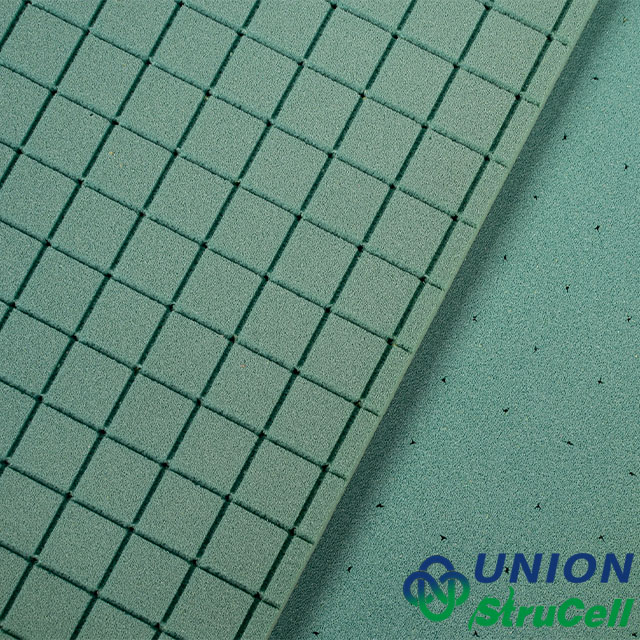
The foam can also be grooved, perforated or contour-cut to help resin flow and air escape during lamination. Grooved and perforated foams are especially valuable for vacuum infusion, where they dramatically improve resin distribution and reduce the risk of dry spots.
Because the material machines and shapes so easily, it also supports efficient prototyping. Designers can quickly produce and test foam-core panels, iterating on the design before committing to production tooling. This shortens development cycles and reduces the cost of bringing a new composite product to market.
Define the part and its environment. Record panel dimensions, supports, expected loading, exposure to moisture, service temperature and any fire requirements before requesting a grade. Separate the material requirement from the completed-part requirement. A boat interior, an immersed buoyancy component and a transport panel can all use closed-cell foam but need different evidence and inspection plans.
Confirm the actual material specification. Request the current StruCell® grade data sheet, density range, thickness tolerance and surface configuration. Identify whether numerical values are typical, minimum or an acceptance limit. The documented P80 compressive strength is 1.4 MPa and shear strength is 1.15 MPa; these product data are not automatically allowable stresses for an entire finished structure.
Build a representative trial panel. Use the intended resin, reinforcement, surface preparation, tooling and cure cycle. Include realistic joints and edge details, not only a perfect small coupon. Check wet-out and consolidation, then inspect the bond line and any machining features. If a process change is necessary, record it and repeat the relevant evaluation instead of assuming equivalent performance.
Agree on acceptance and traceability. Define which dimensions, surface defects, bond observations and mechanical tests determine acceptance. Retain batch identification and record processing conditions so that a successful sample can be reproduced. Ask for the certificate scope and current validity where certification is part of the purchase requirement; a general quality-system certificate is not proof that every product is qualified for every application.
Inspect the finished part and plan maintenance. Protect exposed edges and penetrations with details appropriate to the laminate and service environment. Inspect around inserts and repaired areas, where concentrated loading or damage can change the risk. Establish maintenance criteria with the responsible designer. Low water absorption reduces one risk but does not eliminate leakage paths, impact damage or the need to inspect a marine sandwich structure.
Closed-cell PVC foam has earned its place as the leading structural core material through a combination of properties that are difficult to find together in any single alternative. It is light, stiff, dimensionally stable and exceptionally resistant to water, and it can be selected for common composite resin systems after grade-specific compatibility and process validation.
Across marine, wind energy, transportation, sports and industrial applications, the material has proven itself over decades of service. It allows designers to build structures that are lighter, stiffer and more durable than would be possible with solid laminates, while remaining economical and easy to process.
The key to getting the best from the material is selection and execution: choose the right density and grade for the loads and environment, prepare the surface properly, and consolidate the laminate fully. When these fundamentals are respected, closed-cell PVC foam delivers reliable, long-lasting performance.
Whether you are building a boat hull, a wind blade, a vehicle panel or a pickleball paddle, understanding what closed-cell PVC foam is and how it behaves is the first step toward a better composite structure. The completed part must be validated against its own weight, stiffness, durability and cost targets; no core is universally superior to all alternatives.
To discuss your specific project and find exactly the right grade, simply contact our expert team today for a datasheet, samples, technical data and hands-on application guidance.
Closed-cell structure limits water uptake but does not make a complete sandwich panel waterproof. Report water absorption with the exact grade, test conditions and exposure duration. Seal exposed edges and inspect damaged skins, joints and penetrations.
Select density from the part load case, environment and manufacturing process, not the application name alone. Documented StruCell® P45 is 48 kg/m³ and P80 is 80 kg/m³. Confirm grade-specific strength data and use a representative panel trial before final selection.
Suitable StruCell® grades can be selected for epoxy lamination. Confirm compatibility with the exact epoxy formulation and its cure temperature, pressure and exotherm. A successful bond and cure trial is more reliable than a generic statement covering every resin system.
Surface preparation depends on the supplied board surface and the chosen resin or adhesive. Follow the supplier instructions for abrasion, cleaning and any required primer, and avoid solvents that have not been approved for the grade. Verify the bond on a representative panel.
Compare PVC and PET at the required density, test method and processing conditions. Mechanical properties, water uptake and thermal limits vary between grades, so neither material is universally superior. Recyclability also depends on the finished laminate and the available recovery route.
Fire performance is grade-specific. The documented StruCell® portfolio includes grades with UL94 V-0 information, but classification must be confirmed for the exact grade, thickness and report scope. A core test does not automatically establish compliance for a completed vehicle or building panel.
Service life depends on loading, laminate construction, environment, damage and maintenance. Closed-cell structure can help limit moisture uptake, but it does not guarantee a universal lifetime. Inspect and repair the complete structure according to its design and operating requirements.
Thermoforming must be confirmed for the exact foam formulation and thickness. Use the supplier-approved heating window and validate dimensions and properties after forming. Machining, contour cutting or grooved constructions may provide alternative ways to achieve the required geometry.