Author: Site Editor Publish Time: 2025-09-18 Origin: Site


In the world of advanced materials, terminology matters. A common point of confusion for engineers, designers, and builders is the difference between "PVC foam board" and "structural PVC foam core." While they share a base polymer, they are fundamentally different products engineered for vastly different purposes. One is a low-cost commodity for temporary applications, while the other is a high-performance structural material designed to be the backbone of advanced composites.
In the world of polymers and composites, few terms cause more confusion than "PVC Foam Board." A single search query can return results for everything from inexpensive exhibition signage to the advanced core materials used in cutting-edge marine vessels and aerospace components.

This image is a screenshot of a portion of the search results for the keyword "pvc foam board."
You can see a wide variety of PVC materials displayed.
While these search results appear to be board-like structures, their applications, mechanical properties, and materials differ significantly, leading to confusion among these products without careful analysis.
This confusion often stems from a critical but overlooked distinction: the fundamental difference between standard, calcium carbonate-filled PVC foam board and rigid, structural PVC foam core.
Many users searching for "PVC foam board" are often looking for a cheap, white, rigid sheet for simple applications like temporary signage. These boards are typically filled with calcium carbonate. However, if your project demands high strength, low weight, durability, and advanced fabrication capabilities, what you actually need is a structural rigid PVC foam core.
As a leading global manufacturer of StruCell® Structural PVC Foam Core, UNION COMPOSITES is here to demystify these materials. Choosing incorrectly can lead to project failure, increased costs, and significant safety risks. This guide will provide a detailed, technical comparison to ensure you select the right material for your application.

Question:
What are the differences between these PVC FOAM BOARDs?
Or, what is the difference between the common white PVC FOAM BOARD and Structural PVC FOAM CORE?
When you encounter a low-cost, dense, and often brittle white plastic sheet referred to as "PVC foam board" or "Foamex," you are likely dealing with a board filled with a high percentage of calcium carbonate (CaCO₃).
This material is made by mixing PVC resin with a significant amount of calcium carbonate powder, which acts as a low-cost filler. The mixture is then typically extruded using a "free foaming" or Celuka process, which creates a board with a thin, smooth skin. While CaCO₃ reduces the overall cost, it fundamentally compromises the material's performance.

This picture shows what people commonly call "PVC FOAM BOARD". It is very common in our daily life.
From the picture, you can see that it is white, regular board-shaped, and dense.
It looks more like a solid board than foam.
High Density and Weight: Calcium carbonate is a dense mineral. Its inclusion makes these boards significantly heavier than their structural counterparts of the same size.
Brittleness and Low Strength: The high filler content makes the board brittle. It is prone to snapping when bent and has poor impact and tensile strength.
Poor Machinability: The abrasive nature of calcium carbonate rapidly dulls cutting tools like CNC bits and saw blades. Machining generates significant dust, and edges are often rough and prone to chipping. Heat bending frequently leads to cracking.
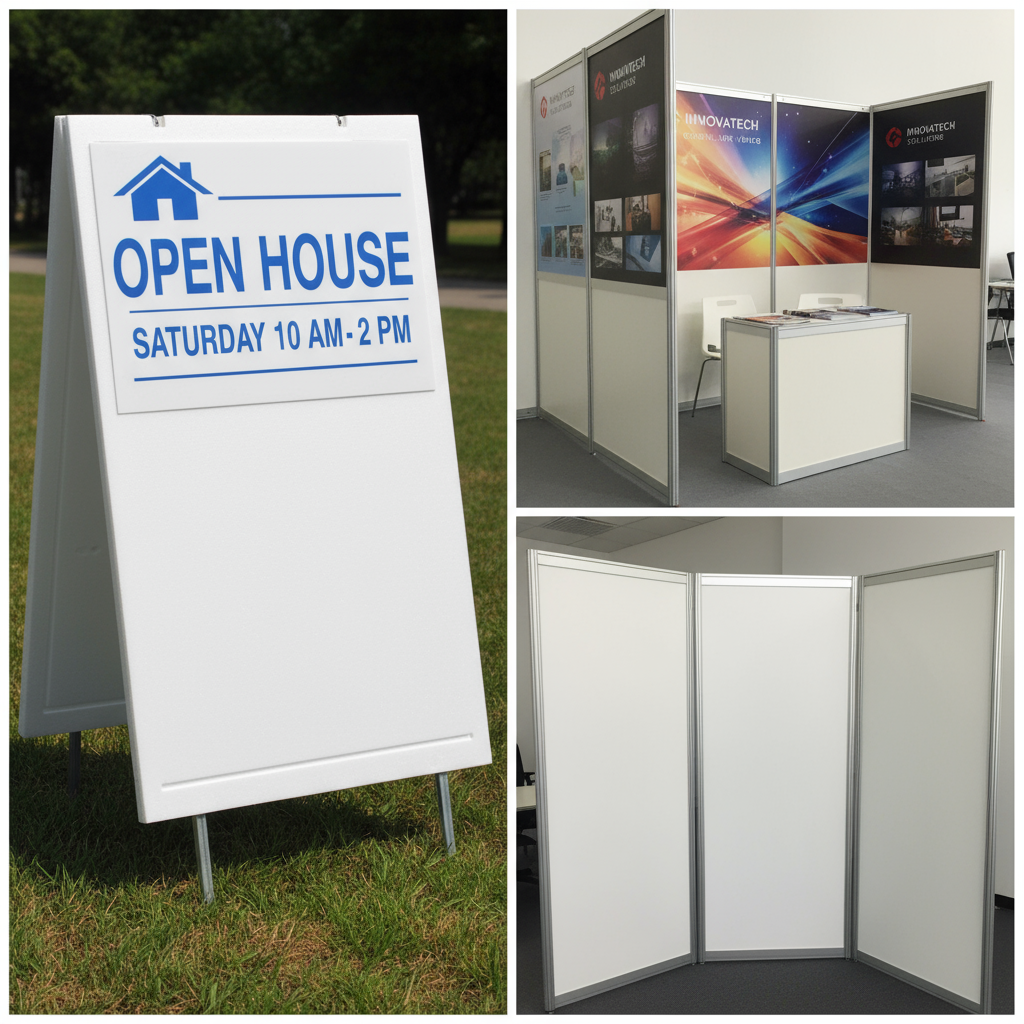
Primary Applications: Due to these limitations, calcium carbonate-filled boards are best suited for low-demand, short-term applications like point-of-purchase displays, low-cost signage, temporary exhibition booths, and packaging.
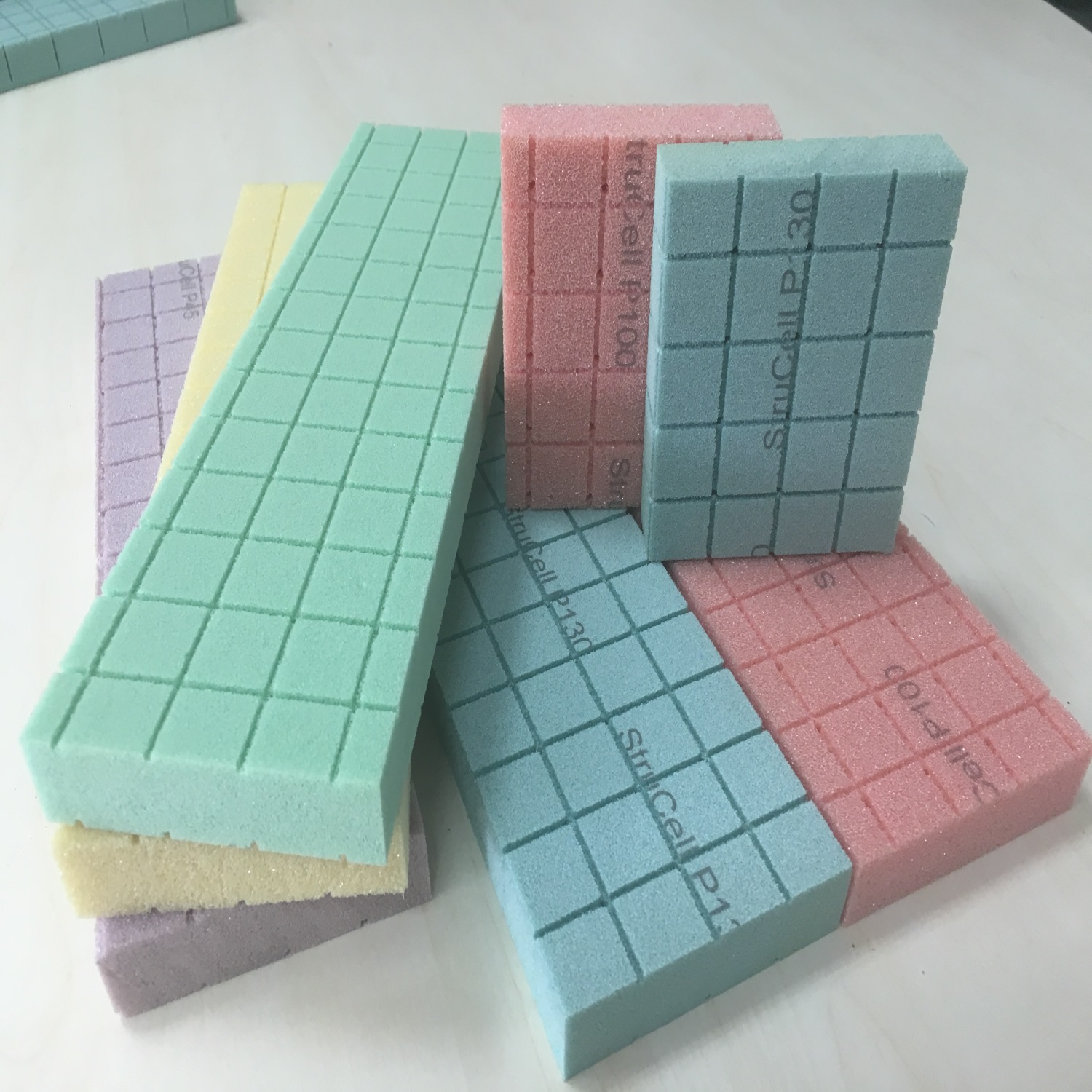
In stark contrast, a structural rigid PVC foam core, like UNION's StruCell®, is an advanced engineering material. It is not a standalone product but a core component designed to function within a high-performance sandwich panel, much like steel rebar reinforces concrete.
Structural PVC foam is made from pure, cross-linked polyvinyl chloride[1]. The manufacturing process involves precision foaming that creates a highly uniform, closed-cell microstructure (>95% closed-cell). This process, which uses chemical blowing agents under controlled temperature and pressure cycles, results in a material with permanent structural integrity and no cheap fillers.
|
|
Exceptional Strength-to-Weight Ratio: This is the hallmark of a structural core. It provides incredible stiffness and load-bearing capacity at a fraction of the weight of solid laminates or filler-heavy boards.
Superior Durability and Toughness: The cross-linked polymer structure offers excellent fatigue resistance, impact strength, and flexibility, making it ideal for dynamic applications in harsh environments[2].
Unmatched Machinability: Pure PVC foam is easily machined. It can be precision-cut with CNC routers into complex, special-shaped parts with smooth edges and minimal dust. This allows for incredible design freedom, from custom-shaped buoyancy modules to intricate automotive interior components.
Extreme Environmental Resistance: With a closed-cell structure, water absorption is incredibly low (<1.5%), making it completely waterproof and resistant to rot, saltwater, and most chemicals. This is why it is a material of choice for the marine industry and holds certifications like DNV GL.
Standard PVC Foam Board: A semi-structural, cost-effective material often used as a standalone product for low-load applications. It is typically filled with calcium carbonate (CaCO₃) to reduce costs, which significantly compromises its mechanical properties.
Structural PVC Foam Core: A high-performance, engineered core material designed to be the heart of a composite sandwich structure. It is a pure, cross-linked PVC foam with a closed-cell structure, providing exceptional strength-to-weight ratio and durability. It is always laminated with fiberglass, carbon fiber, or other skins.
The following table provides a clear, at-a-glance comparison of the two materials' key characteristics.
Feature | Structural Rigid PVC Foam Core (e.g., UNION StruCell®) | Calcium Carbonate-Filled PVC Foam Board |
|---|---|---|
Visibility in Final Application | A Concealed Core Material. It is never visible in the end product. It is permanently sandwiched between other materials (like fiberglass or aluminum) to form the structural heart of a component. | The Final Surface Material. It is designed to be directly visible and used as-is. It is the finished surface itself, requiring no further lamination or covering. |
Primary Composition | Cross-linked Polyvinyl Chloride (PVC) resin, stabilizers, and performance additives. No calcium carbonate. | PVC resin with a high percentage of Calcium Carbonate (CaCO₃) as a filler. |
Production Process | Controlled chemical foaming and cross-linking under specific heat and pressure. Creates a >95% closed-cell microstructure. | Simple free-foaming extrusion. The filler complicates the process and prevents true cross-linking. |
Mechanical Properties | Excellent. High strength-to-weight ratio, tough, and impact-resistant. Designed for load-bearing applications. | Inferior. Brittle, rigid, and prone to cracking under stress. Not suitable for structural loads. |
Cell Structure | Ultra-high closed-cell (>95%). Microcellular structure ensures minimal resin absorption (<1.5%). | Irregular, partially open cell structure. Higher potential for water and resin uptake. |
Primary Function | A structural core material. Designed to be laminated within a composite structure to provide stiffness and strength. | A semi-structural standalone board. Often used directly as a single-material panel. |
Weight & Density | Ultra-lightweight for its strength. Densities range from 45 to 250 kg/m³. | Heavier than structural foam due to the dense mineral filler. |
Machinability & Fabrication | Excellent. Easily CNC-machined into complex shapes, producing smooth edges with minimal tool wear. | Poor. Abrasive to cutting tools, generates heavy dust, and edges are rough. Difficult to heat-bend. |
Water & Chemical Resistance | Excellent. Closed-cell structure (>95%) ensures extremely low water absorption (<1.5%) and high chemical resistance. | Good, but compromised. The PVC matrix is resistant, but high filler content can increase long-term water absorption potential. |
Surface Quality | Consistent, high-quality surface ideal for direct lamination. Available with specialized treatments (grooved, perforated, scrim-backed). | Rougher, more porous surface. The thin skin can affect the quality of finishing processes like painting or gluing. |
Role in Application | A core material used inside a composite sandwich structure (e.g., with fiberglass skins) to provide structural integrity. | A standalone board used directly for its finished surface. |
Cost Driver | Driven by the price of pure, high-quality PVC resin and advanced manufacturing processes. | Significantly lower cost due to the substitution of expensive PVC resin with cheap calcium carbonate. |
Cost vs. Value | Higher initial material cost, but offers superior performance, longevity, and lower overall project costs through weight savings and reduced resin use. | Significantly lower upfront cost, driven by the cheap filler material. The value is limited to short-term, non-critical uses. |
The most critical difference lies in the formulation. Adding calcium carbonate is a common industry practice to reduce material costs. However, as noted in research on polymer composites, the addition of mineral fillers like CaCO₃ increases density and brittleness while decreasing tensile strength and impact resistance.
StruCell® PVC Foam Core is manufactured without any mineral fillers. It uses a cross-linking process that creates a permanent, three-dimensional network within the polymer. This process, similar to that used by other structural foam leaders, is what grants the material its exceptional structural integrity, stability, and resistance to creep and fatigue.
Understanding the application is key to selecting the correct material.
This is the most practical difference for engineers and designers.
Calcium Carbonate PVC Foam Board: Think of this as a product. You order a sheet and use it as-is. Its applications are limited to low-stress environments: temporary signage, exhibition displays, simple modeling, and inexpensive partitions.
Structural PVC Foam Core: This is a component. It is the core of a Composite Sandwich Structure. This engineering principle is a cornerstone of modern lightweight design, leveraging a lightweight core's high bending stiffness to create strong, rigid, and light panels. Our core is engineered to be bonded with fiberglass, carbon fiber, or acrylic skins to create parts that are stronger than the sum of their parts.

Your ability to fabricate parts is directly impacted by the material's composition.
CaCO₃ PVC Foam Board: The abrasive calcium carbonate particles rapidly dull cutting tools. Machining results in powdery, messy dust and frayed, unreliable edges. It is unsuitable for high-precision or complex fabrication. Usually this kind of PVC foam board containing calcium carbonate is made into a plate shape, so the shape that can be processed is also very limited.
StruCell® PVC Foam Core: Its homogeneous, filler-free composition allows for pristine CNC machining. It can be milled into intricate 3D contours, complex grooves, and precise channels with smooth edges and tight tolerances (±0.2mm). This is essential for creating the custom-shaped parts needed in advanced manufacturing.

Short-term indoor or outdoor signage.
Temporary displays for trade shows and retail.
Non-structural decorative panels.
Low-cost backing boards for mounting prints.
Marine & Boat Building: As a DNV GL-certified material, it is the ideal structural core for shipbuilding. It is used for boat hull construction (bottom and sides), deck panels, bulkheads, interior partitions, and other components for yachts and houseboats, providing superior strength-to-weight ratios and saltwater resistance.

Automotive & Transportation: Delivers lightweight core solutions for vehicle manufacturing. It is used to significantly reduce weight in RV and motorhome wall/ceiling panels, truck refrigeration unit insulation, campervan structural partitions, and various automotive interior components to improve fuel efficiency.

Wind Energy: As a core material with lightweight durability and fatigue resistance, it is widely used for structural reinforcement in wind turbine blade cores and nacelle components[3].

Aviation: Provides high-performance, fire-retardant core solutions for aircraft interiors and UAV components, meeting TÜV SÜD-certified safety standards where low weight and safety are paramount.

Sports Equipment: Acts as a durable, waterproof, and shock-absorbent core for high-performance sports equipment, including surfboards, bicycle helmets, and archery equipment.

Drone: Offers high-strength, lightweight core solutions for drone frames and fuselage structures. Its excellent strength-to-weight ratio and vibration-damping properties make it suitable for main frames, electronics mounting plates, and protective enclosures.

The distinction is clear: one is a cheap filler board, and the other is a sophisticated engineering material. At UNION COMPOSITES, we specialize in the latter. Our StruCell® Structural PVC Foam Core is engineered for professionals who cannot afford to compromise on performance.
By choosing a high-quality, filler-free structural foam, you benefit from:
Guaranteed Performance: Our foam meets rigorous international standards, including DNV GL[4], ISO 9001, and TÜV SÜD, ensuring consistent mechanical properties for all load-bearing applications.
Design Freedom: With exceptional CNC machining compatibility, we can deliver custom-cut, complex parts tailored to your exact specifications, accelerating your prototyping and production cycles.
Long-Term Value: While the upfront cost of a premium core is higher than a filled board, the total cost of ownership is lower. You achieve significant weight reduction, enhanced fuel efficiency in transport applications, minimal resin absorption, and a product lifespan that far exceeds that of commodity boards.
Ultra-Low Resin Absorption: Our proprietary StruCell® microcellular technology features a closed-cell content of >95%, drastically reducing resin uptake during vacuum infusion or lamination. This saves weight and cost in the final composite part.
Global Logistics & Support: We offer no MOQ, free A4 samples, and provide 24/7 technical support from multi-lingual engineers to help you optimize your process and material selection.

Don't let a simple keyword lead you to the wrong material. While both products may be found under the "PVC foam" umbrella, they exist in different universes of performance and application. A calcium carbonate-filled board is a disposable commodity for visual purposes, whereas a structural rigid PVC foam core is a permanent, high-performance solution for building stronger, lighter, and more durable products.
If your project demands structural integrity, lightweight performance, and long-term reliability, look past the "board" and focus on the "core."
The choice between these two materials is not about finding a "better" product, but about selecting the correct tool for the job.
Choose Calcium Carbonate-Filled PVC Foam Board for low-cost, short-term, low-stress applications where the board will be used alone. Think signage, simple props, or temporary structures.
Choose UNION StruCell® Structural PVC Foam Core for engineering-critical, long-term, and high-stress applications where the material will be part of a composite sandwich structure. This includes boat building, vehicle manufacturing, renewable energy systems, and any application requiring a high strength-to-weight ratio, moisture resistance, and custom machinability.
Q1: What exactly is a "Structural PVC Foam Core," and how is it fundamentally different from a standard "PVC Foam Board"?
A: These are two completely different products engineered for different purposes.
Structural PVC Foam Core, like UNION's StruCell®, is a high-performance engineering material. It is made from pure, cross-linked PVC without any fillers. Its primary function is to serve as the "core" in a composite sandwich structure, where it is laminated between skins like fiberglass or carbon fiber to provide exceptional strength, stiffness, and lightweight performance. It is a hidden part of the final structure.
Standard PVC Foam Board is a low-cost, standalone sheet product. To reduce costs, it is filled with a high percentage of calcium carbonate (CaCO₃), which severely compromises its performance, making it heavier and more brittle. It is primarily used for non-structural applications like temporary signage and exhibition displays.
Q2: Why are some PVC foam boards so inexpensive?
A: The price difference comes down to composition. Inexpensive PVC foam boards substitute a large portion of the costly PVC resin with cheap calcium carbonate powder. While this lowers the material cost, it drastically sacrifices mechanical properties, durability, and machinability. In contrast, our StruCell® PVC foam core is made exclusively from pure, high-quality PVC resin to guarantee its top-tier performance as a structural material.
Q3: Can I use a cheap PVC foam board for structural applications like boats or vehicles?
A: Absolutely not. This would be a severe safety hazard. Calcium carbonate-filled boards are brittle, lack impact resistance, and have poor fatigue strength, making them completely unsuitable for structural loads. In dynamic and demanding environments like a boat hull, they can easily crack or fail, leading to catastrophic structural damage. For critical applications in marine, automotive, or wind energy, you must use a certified, high-performance structural PVC foam core, such as our DNV GL-approved materials.
Q4: What makes your PVC foam core "structural"?
A: The "structural" properties come from two key factors: pure composition and a cross-linked manufacturing process.
Pure Composition: Our PVC foam core contains no performance-degrading fillers.
Cross-Linking Process: During manufacturing, the PVC polymer chains form a permanent, three-dimensional molecular network. This "cross-linking" is what gives the core its exceptional mechanical strength, resistance to creep and fatigue, and dimensional stability, allowing it to function as a load-bearing heart of a composite part.
Q5: How does a structural PVC foam core perform during CNC machining?
A: Its CNC machining performance is excellent. Because our PVC foam core is a homogeneous, filler-free material, it can be easily milled into intricate 3D contours and special-shaped parts with pristine, smooth edges and tight tolerances (±0.2mm). In contrast, the abrasive fillers in cheap boards rapidly dull cutting tools, create heavy, powdery dust, and result in rough, unreliable edges, making them unsuitable for precision fabrication.
Q6: Is your PVC foam core waterproof?
A: Yes, completely. Our structural PVC foam core features an ultra-high closed-cell content of over 95%. This micro-cellular structure effectively prevents water from penetrating the material, resulting in water absorption of less than 1.5%. This makes it the ideal core material for marine environments, refrigerated truck bodies, and any application exposed to moisture.
Q7: What do you mean by "core material" and "sandwich structure"?
A: A "core material" is not a standalone product but a component within a system. Think of a sandwich: the two pieces of bread are the strong "skins" (e.g., fiberglass), and the lightweight filling in the middle is our PVC foam core. By bonding the core and skins together, you create a "sandwich structure." This structure leverages the I-beam principle to achieve incredible stiffness and strength at a fraction of the weight of a solid material, making it a cornerstone of modern lightweight engineering.
Q8: What is the long-term value of choosing UNION's StruCell® PVC Foam Core over a cheaper board?
A: While the initial cost is higher, our structural PVC foam core delivers superior long-term value and a lower total cost of ownership through:
Guaranteed Performance: Certified by international standards like DNV GL and ISO 9001 for reliability in load-bearing applications.
Lightweight Advantage: Significantly reduces the final part's weight, improving fuel efficiency in vehicles and vessels.
Design Freedom: Exceptional CNC machinability allows for complex, custom designs, accelerating your prototyping and production cycles.
Reduced Production Costs: Its ultra-low resin absorption saves a significant amount of costly resin during lamination, further reducing weight and expense.
Superior Longevity: It is waterproof, corrosion-resistant, and fatigue-resistant, ensuring your product lasts for years, even in the harshest environments.